Litres per batch
50L–10K
Ointment Preparation Plant
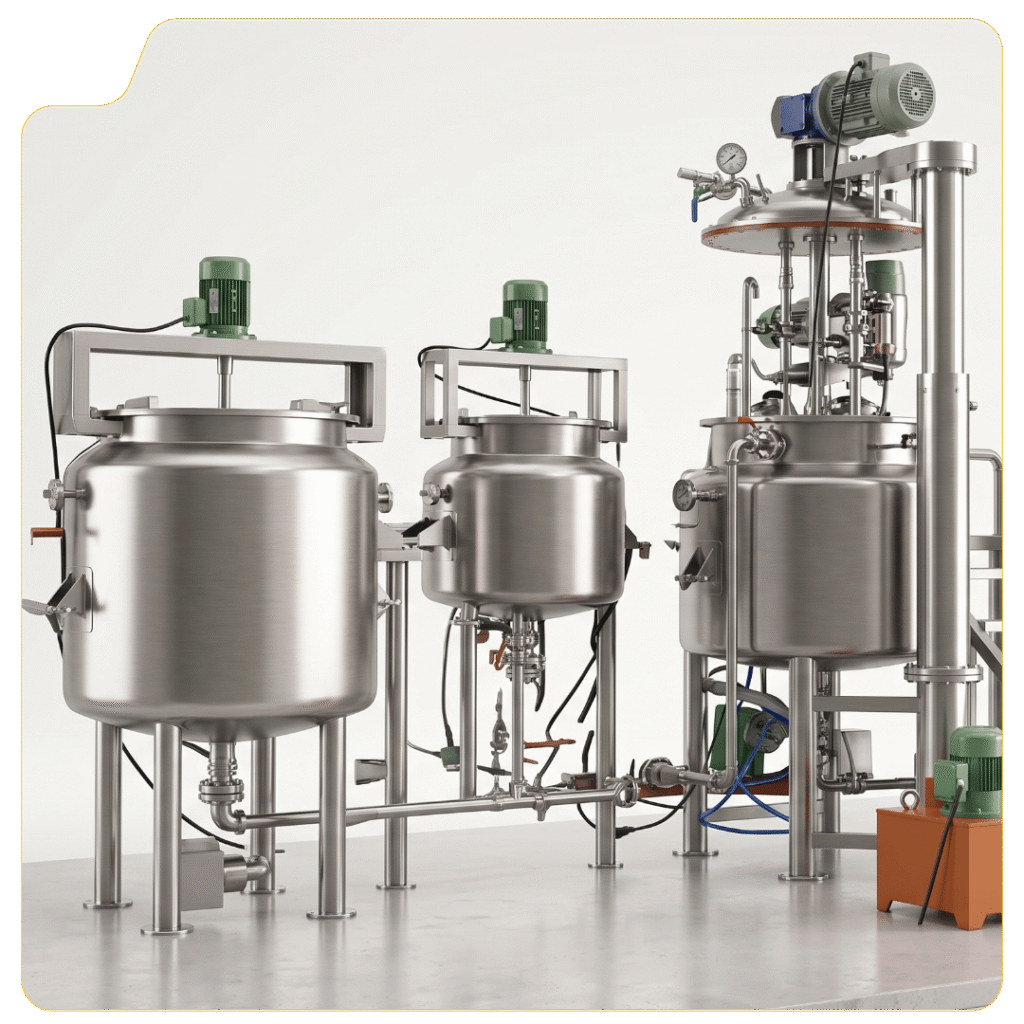
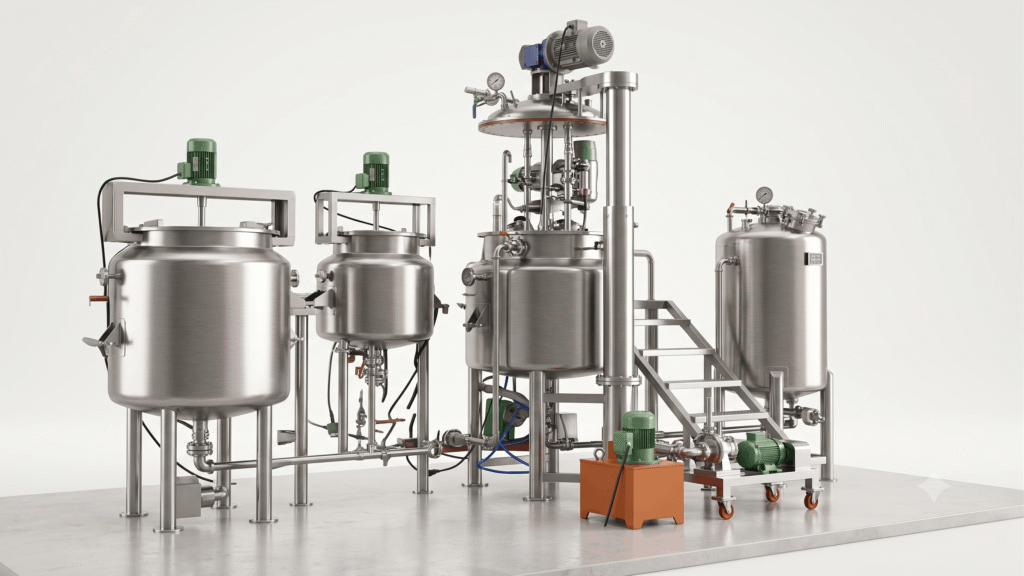
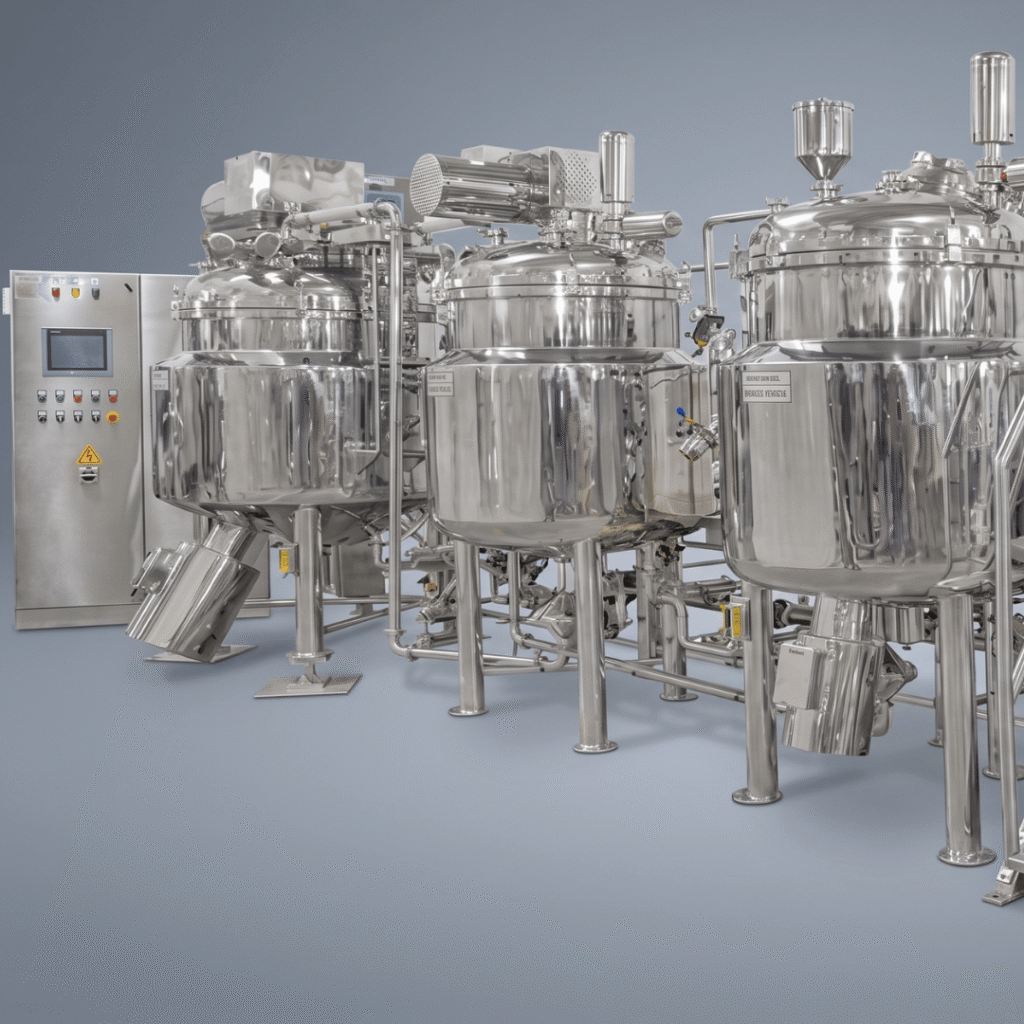
A fully integrated, GMP-compliant manufacturing plant for the production of ointments, creams, gels, lotions, and topical formulations. High-shear homogenisation, vacuum emulsification, jacketed vessel heating and cooling. This is a all in one closed, validated system.
Creams
Gels
Lotion
Topical Formulations
Vacuum Emulsification
WIP/CIP
Built for precision semi-solid manufacturing
Every subsystem is designed to deliver batch-to-batch reproducibility, full CIP compliance, and regulatory documentation readiness.
Vacuum emulsification
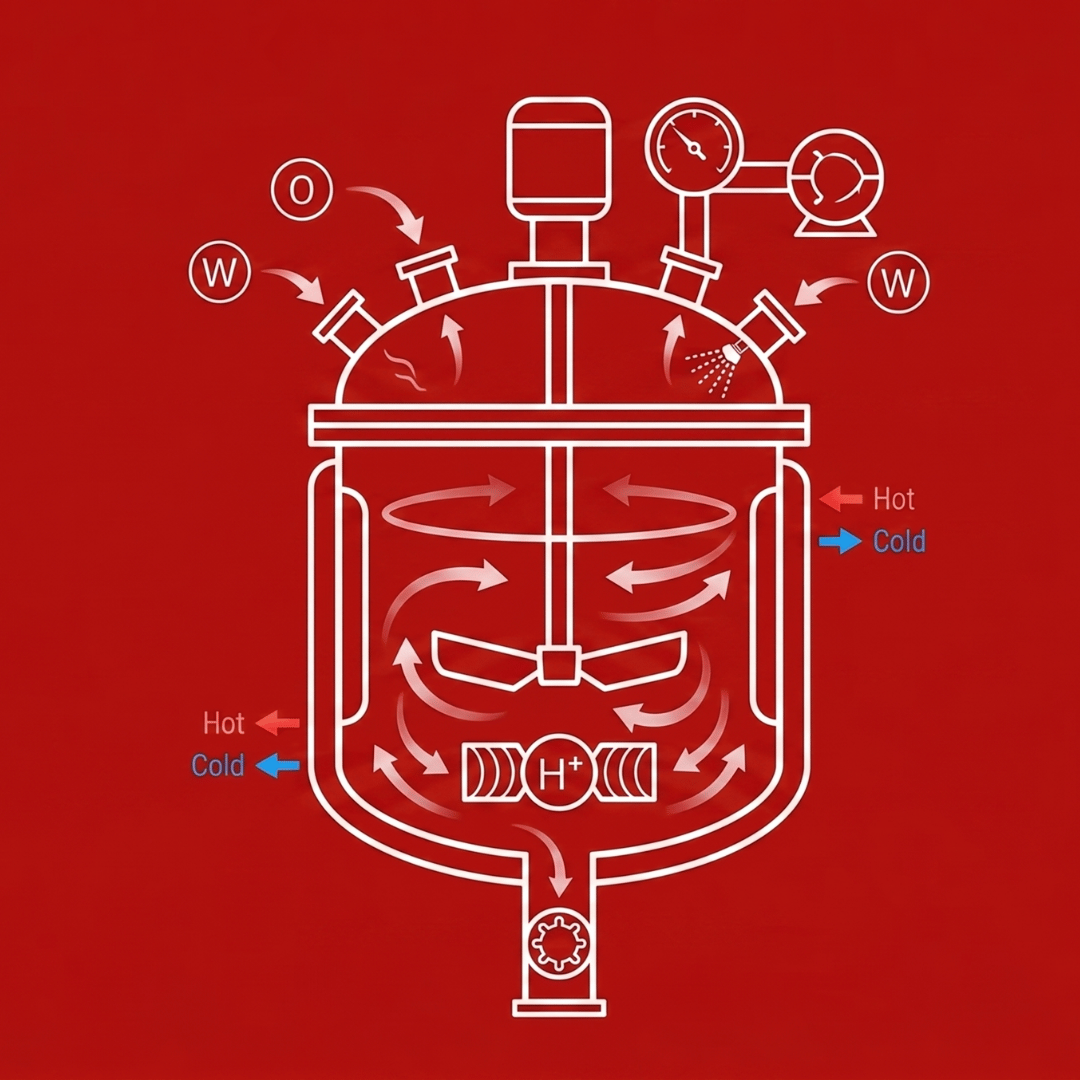
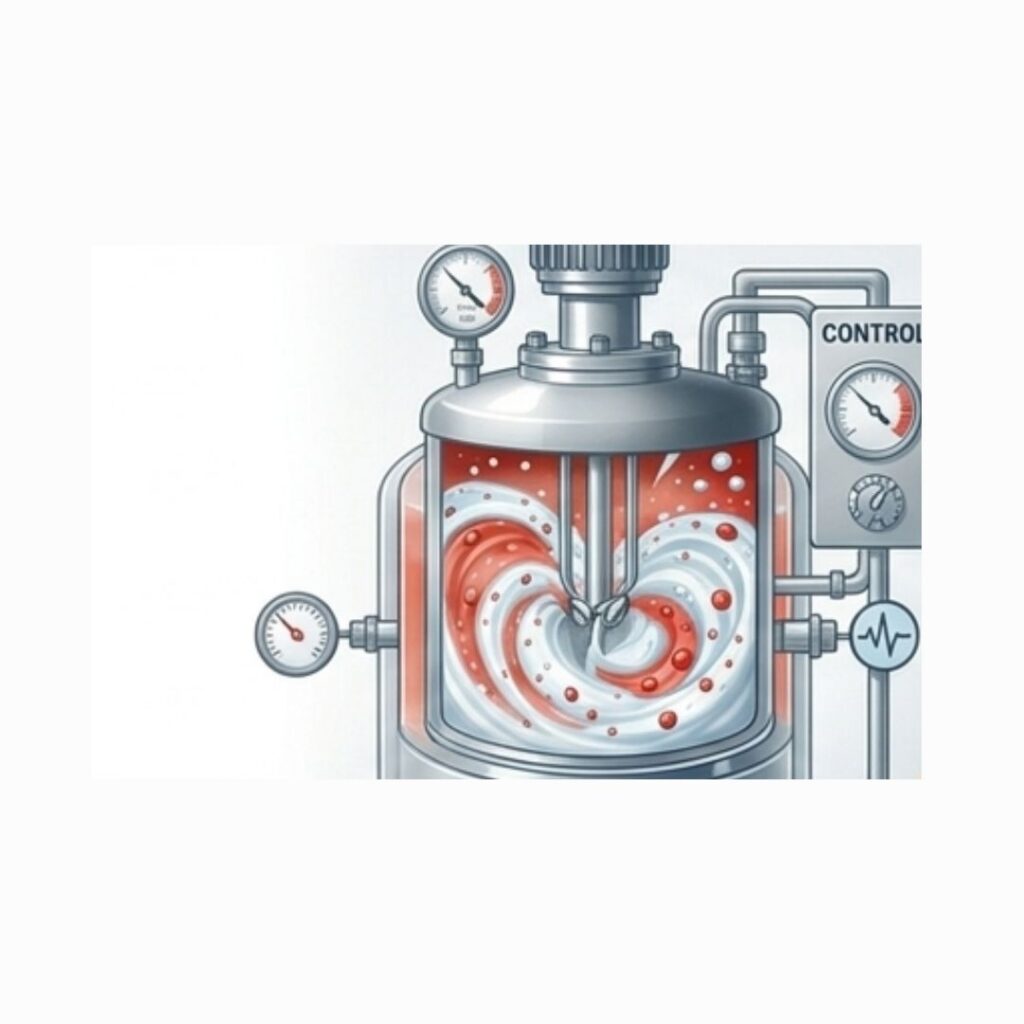
Complete emulsification under vacuum prevents air entrapment, reduces oxidative degradation, and ensures a stable, fine droplet size distribution. Vacuum-rated vessel and all fittings rated to full operational vacuum.
Precision jacket heating & cooling
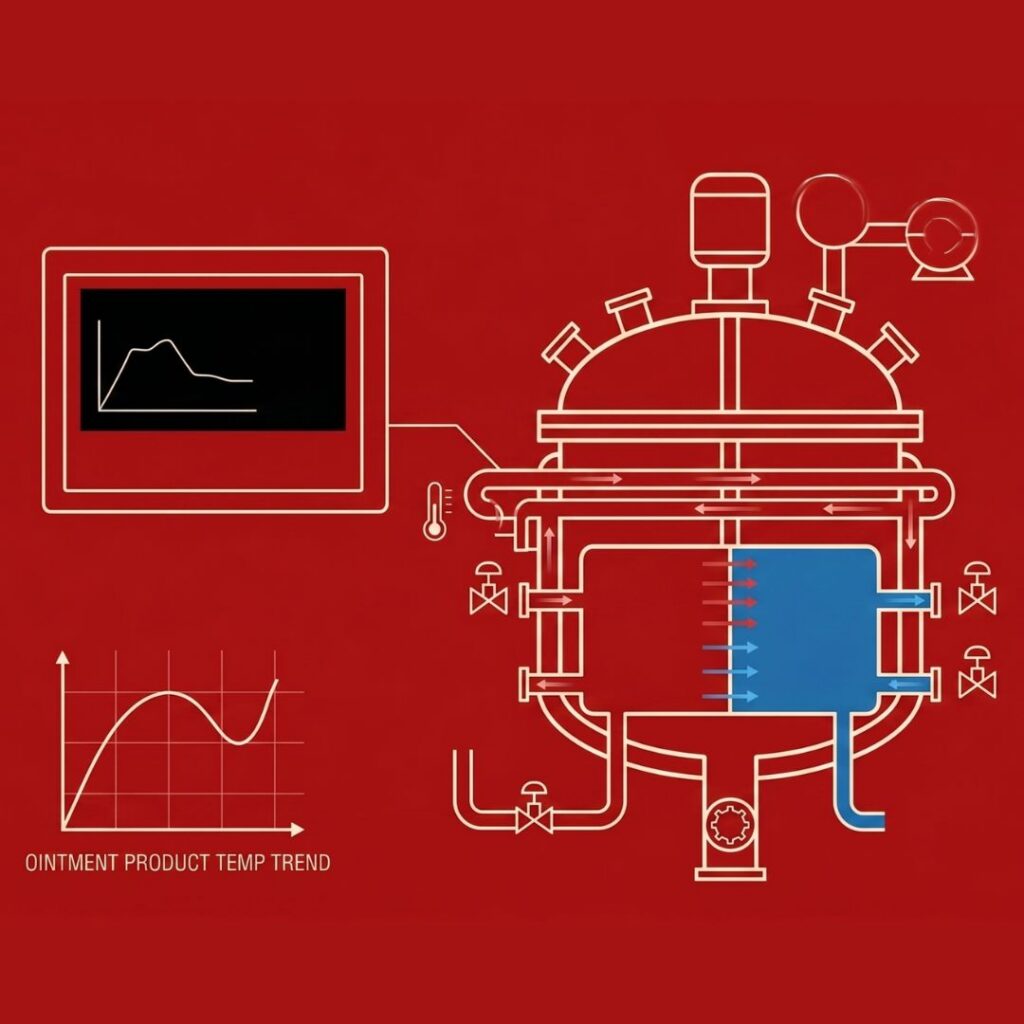
Dual-zone jacketed vessel with independent heating (steam or hot water) and cooling (chilled water) circuits. PLC-controlled temperature ramps with ±1°C accuracy – critical for emulsion stability and crystal form.
Triple mixing system
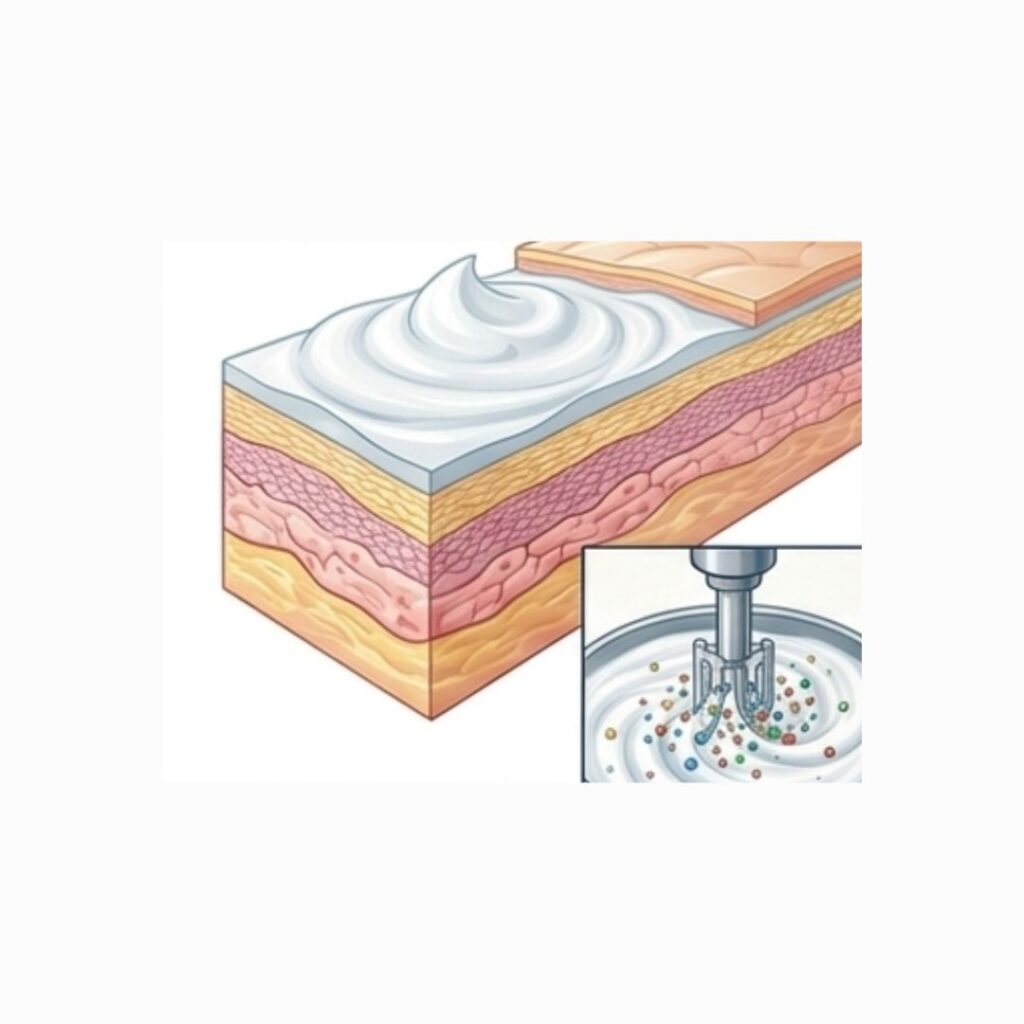
Anchor agitator provides bulk mixing and heat transfer. Wall scrapers ensure no cold spots. Bottom homogeniser generates high shear at the emulsion interface – three mechanisms working simultaneously under one PLC control system.
PLC / SCADA recipe control
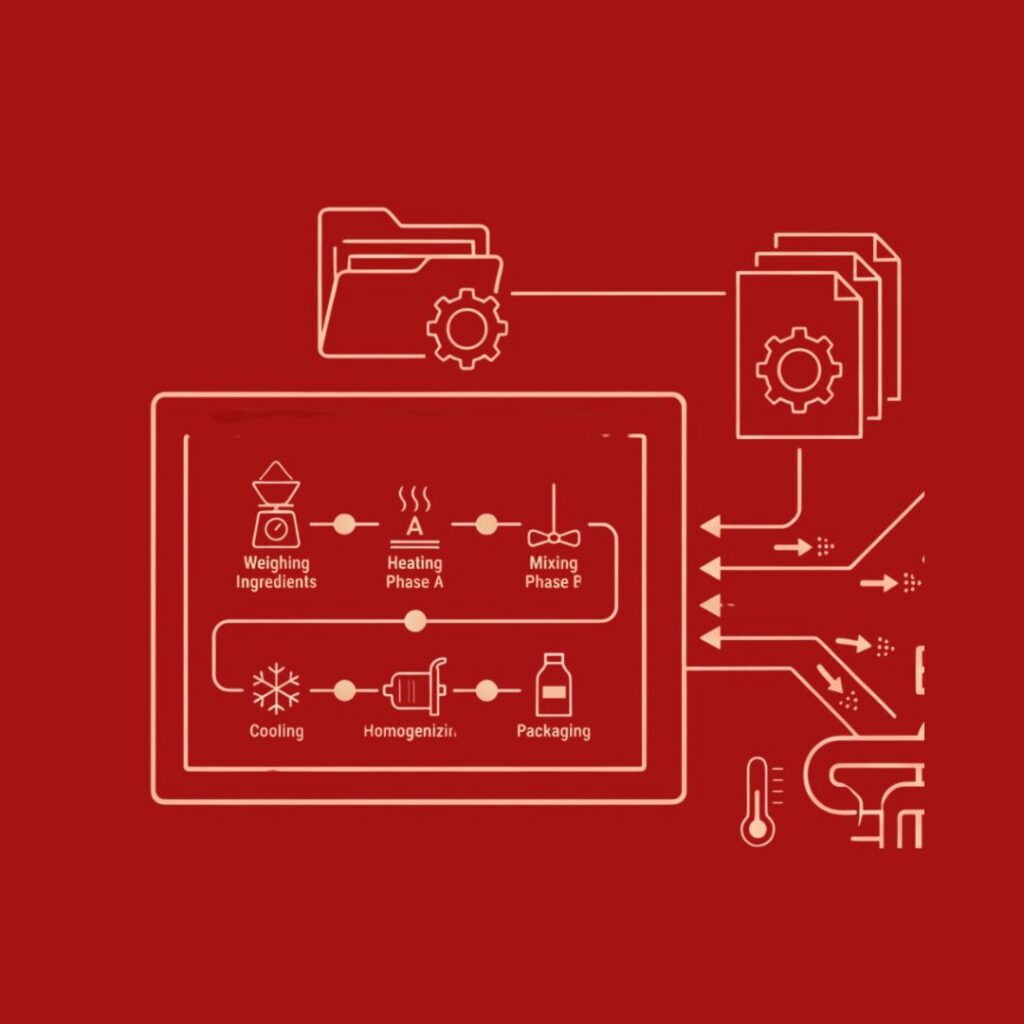
Fully programmable recipes for each product — defining temperature profile, agitator speeds, vacuum levels, mixing times, and ingredient addition sequences. Batch records generated automatically for GMP traceability.
Automated WIP / CIP
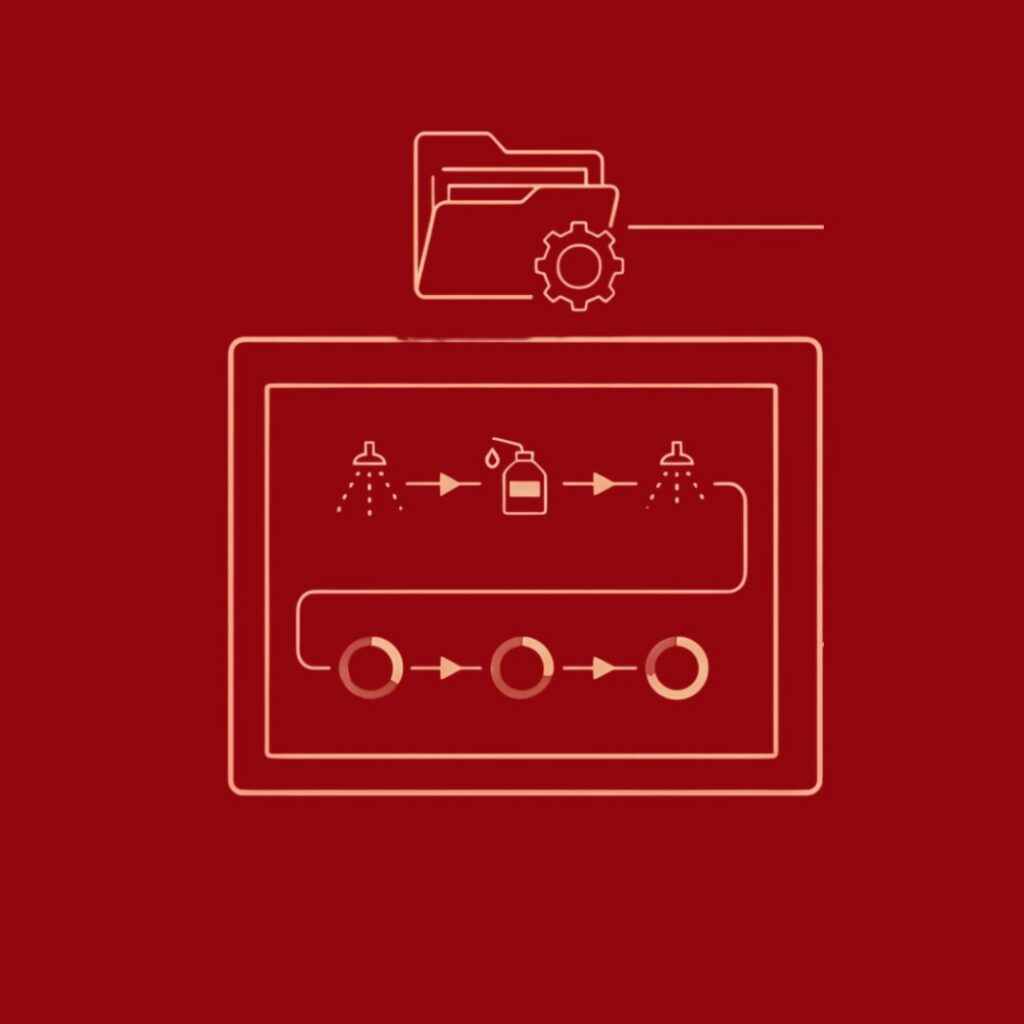
Spray ball nozzles inside the main vessel and phase vessels for validated wash-in-place. PLC-controlled cleaning sequence with detergent wash, rinse, and final rinse cycles. This system provides TOC and conductivity monitoring.
Closed, contained system
All transfers between phase vessels and main vessel are made under vacuum through sanitary pipework. There is no open transfers, no contamination risk, and no operator exposure to product or cleaning agents.
How the plant operates -Step by step
Water phase preparation
Water-soluble ingredients (humectants, preservatives, hydrophilic actives) are dissolved in the water phase vessel under controlled heating. Temperature typically 70–80°C with stirring until complete dissolution and homogeneity.
Water phase preparation
Water-soluble ingredients (humectants, preservatives, hydrophilic actives) are dissolved in the water phase vessel under controlled heating. Temperature typically 70–80°C with stirring until complete dissolution and homogeneity.
Transfer to main manufacturing vessel
Both phases are transferred to the main manufacturing vessel via vacuum or pump. The oil phase transferred first, followed by the water phase. Vacuum seals the vessel preventing air entrainment and contamination.Controlled cooling
Chilled water circulates through the jacket to cool the emulsion to the required addition temperature (typically 40–45°C). The anchor agitator and wall scrapers run continuously to prevent surface crusting and ensure uniform temperature drop across the entire batch.Oil / wax phase preparation
Oil-soluble waxes, emollients, emulsifiers, and lipophilic actives are melted together in the oil phase vessel. Heated to 70–80°C until all waxes are fully melted and the blend is homogeneous and clear.Emulsification under vacuum
The high-shear bottom homogeniser and top anchor agitator run simultaneously under full vacuum. The homogeniser creates the primary oil-in-water or water-in-oil emulsion while the anchor blends the bulk, helping generating a fine, stable droplet size distribution throughout the vessel.
Addition of heat-sensitive ingredients
Fragrance, colour, heat-sensitive actives, and volatile ingredients are added at the lower temperature. In-vessel vacuum prevents evaporation loss of volatile components. A final homogenisation pass ensures uniform dispersion.
Materials & construction
| Contact material | SS 316L, electropolished |
| Non-contact material | SS 304 |
| Internal surface finish | Ra ≤ 0.4 µm |
| Scraper material | PTFE / SS 316L |
| Gaskets & seals | FDA silicone / PTFE |
| Vessel design standard | ASME BPE / GMP |
Process parameters
| Vessel capacity | 50 L – 10,000 L |
| Working volume | 60–80% of total volume |
| Jacket temperature range | 5°C – 150°C |
| Temperature accuracy | ±1°C (PLC-controlled) |
| Vacuum level | Up to –0.9 bar |
| Homogeniser speed | VFD, up to 3500 RPM |
| Anchor speed | VFD, 5–60 RPM |
Ointments
Anhydrous or water-based greasy preparations for skin protection, drug delivery, and wound care. Requires high-shear dispersion of active ingredients in base.
Creams
Oil-in-water or water-in-oil emulsions requiring controlled emulsification under vacuum for stability. Most cosmetic and pharmaceutical topicals.
Gels
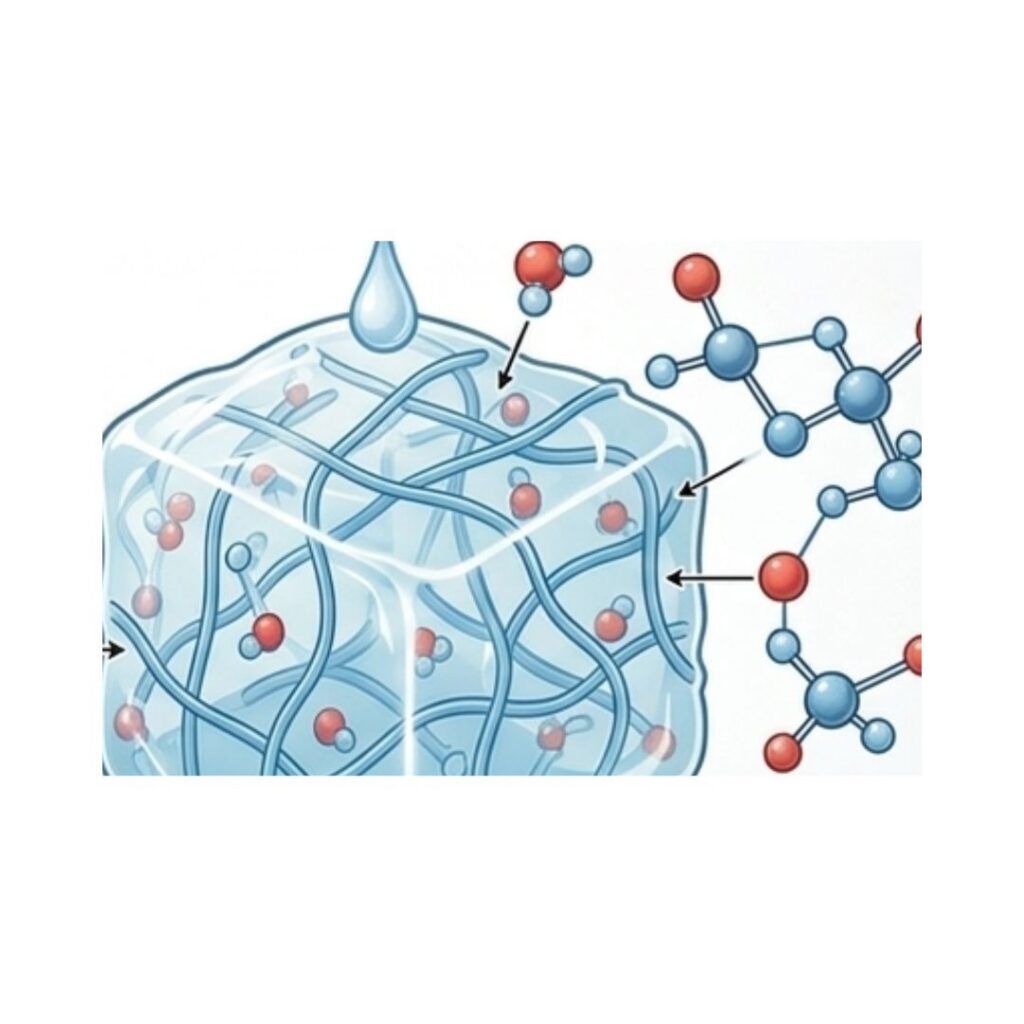
Clear or opaque hydrophilic gels from carbomers, cellulose derivatives, or natural polymers. Requires precise temperature control during polymer hydration.
Lotions
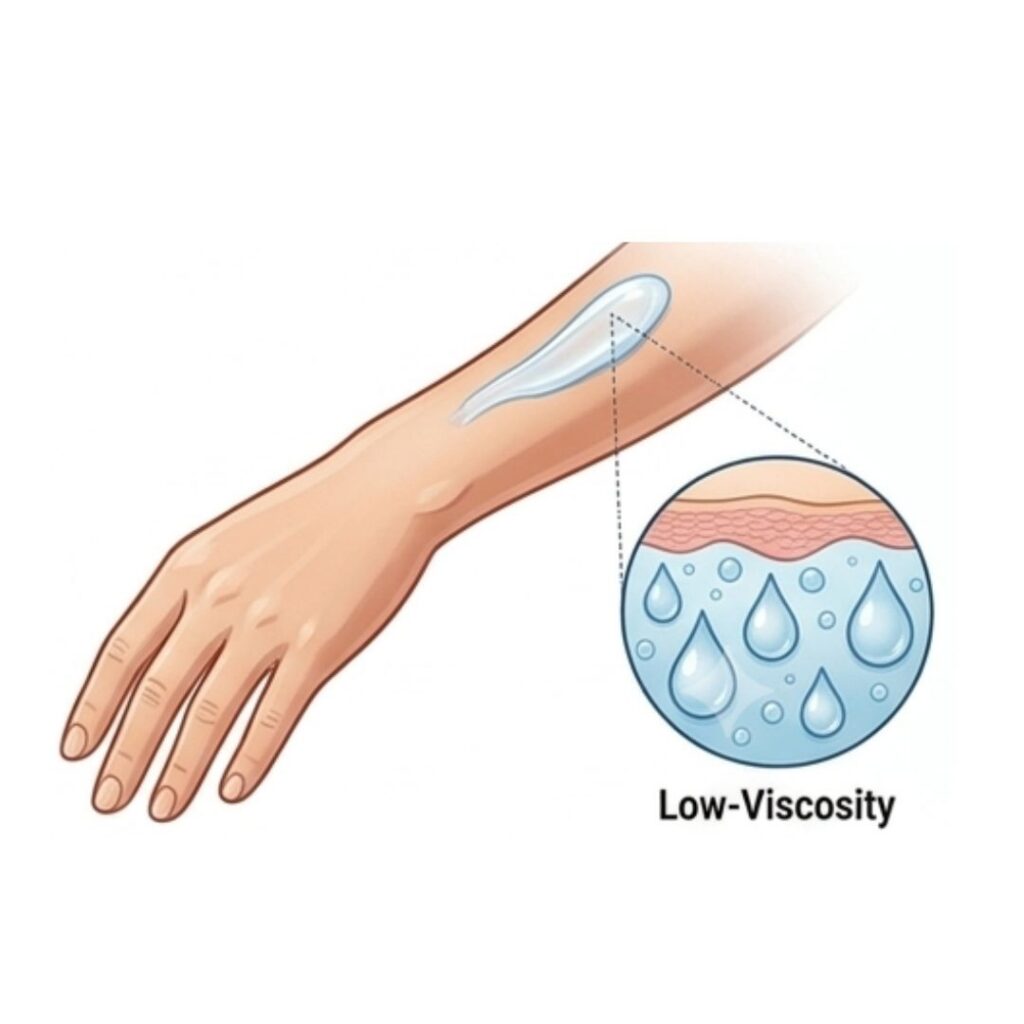
Low-viscosity emulsions for large body surface area application. Similar emulsification process to creams but with higher water content and lower viscosity.
Pastes
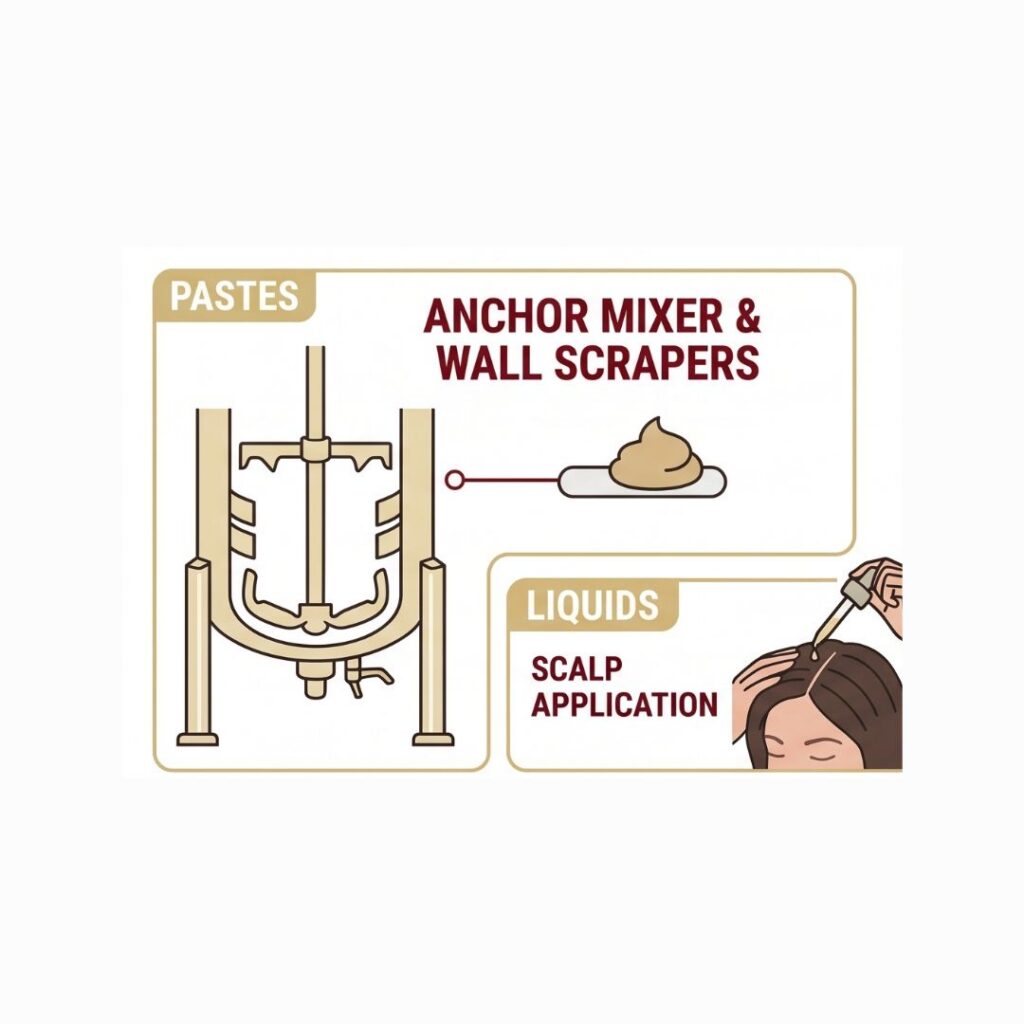
High solids-content semi-solid preparations for skin protection. High viscosity requires heavy-duty anchor agitator with wall scrapers and vacuum mixing.
Liquid topicals
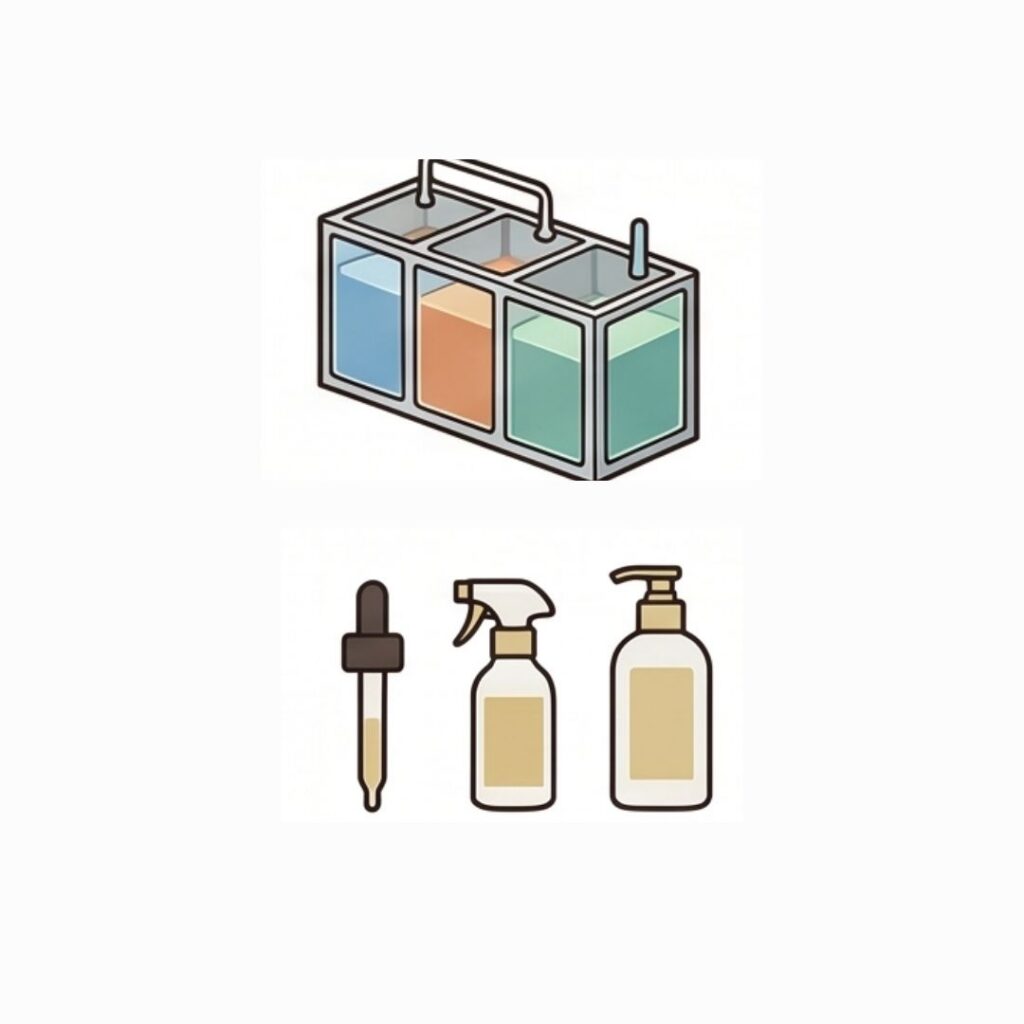
Solutions and suspensions for topical application — scalp treatments, antiseptic solutions, and liquid formulations requiring temperature-controlled mixing.
Why Choose Gem Pharma Ointment Plants?
-
Turnkey Engineering: We provide full end-to-end integration, including internal piping, transfer pumps (lobe or gear pumps), validation documentation (DQ/IQ/OQ), and commissioning.
-
Zero Cross-Contamination: Closed-loop pipeline transfer utilizes a vacuum system, entirely preventing human intervention and environmental contact.
-
Energy Efficient Jackets: Specially baffled jackets ensure rapid heating and cooling cycles, reducing batch processing time by up to 30%.
Built to global standards
GMP compliant
FDA 21 CFR Part 11
EU GMP Annex 11
ATEX / FLP rated
Why Choose Gem Pharma Ointment Plants?
-
Turnkey Engineering: We provide full end-to-end integration, including internal piping, transfer pumps (lobe or gear pumps), validation documentation (DQ/IQ/OQ), and commissioning.
-
Zero Cross-Contamination: Closed-loop pipeline transfer utilizes a vacuum system, entirely preventing human intervention and environmental contact.
-
Energy Efficient Jackets: Specially baffled jackets ensure rapid heating and cooling cycles, reducing batch processing time by up to 30%.